
Category: Starter Stack
Level: Beginner
Time to value: 10-ish minutes
You don’t need to understand Polish grammar to use these prompts. Just copy, paste, and watch what happens.
Each Polish AI prompt solves a specific English ambiguity problem. I’ll explain why they work, but the explanation is optional. The prompts work whether you read it or not.
1. Streść
The English problem:
Summarize this.Summarize how? To what length? The AI guesses.
The Polish fix:
Streść. Odpowiedz po angielsku.Why it works: Polish verbs come in pairs. Streszczać means “be summarizing” (process). Streścić means “finish the summary” (result). Streść is the command form of the perfective. You’re not asking for a summary. You’re grammatically demanding a completed one.
One word. No ambiguity about whether you want a finished product.
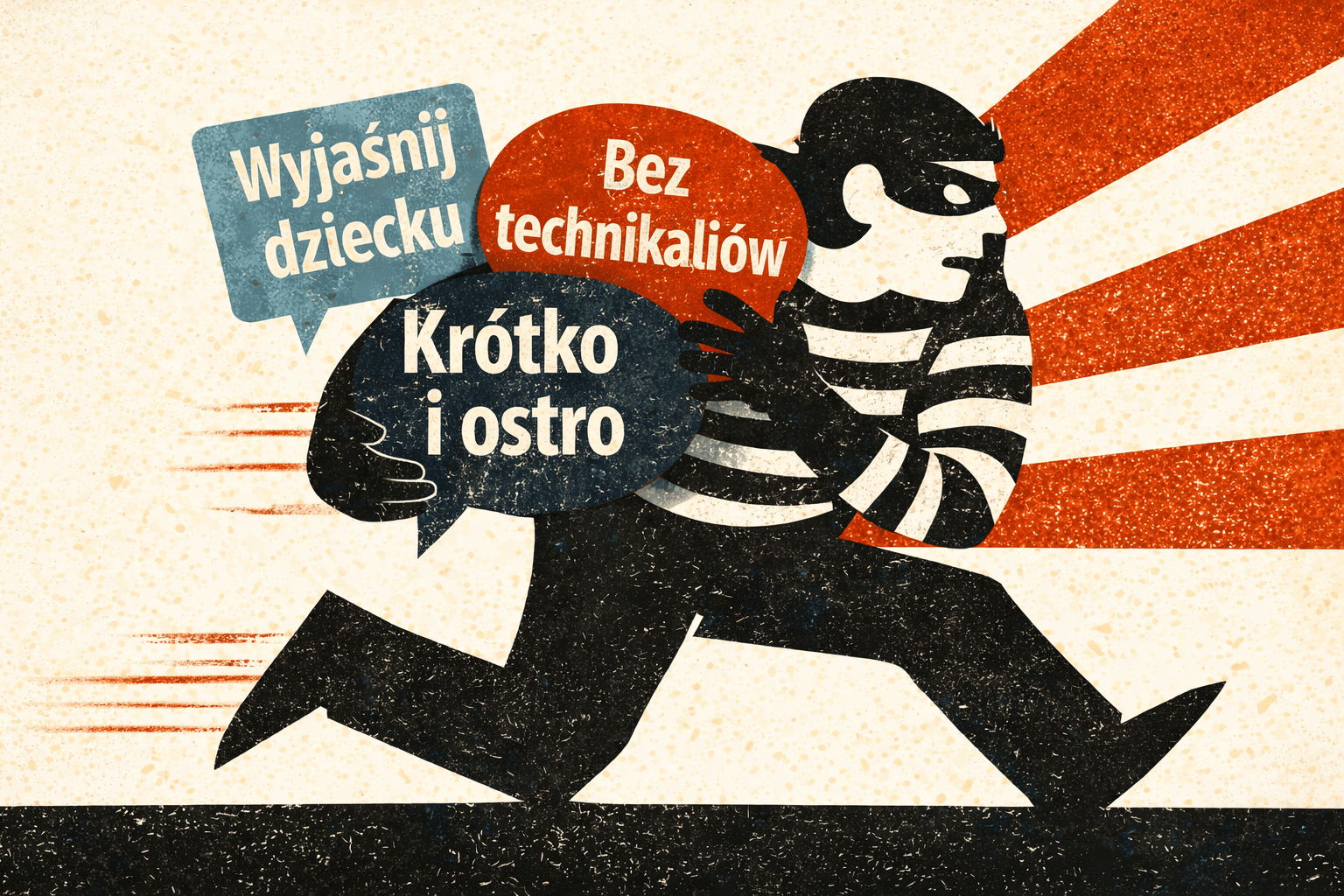
2. Wyjaśnij dziecku
The English problem:
Explain this in simple terms a beginner could understand.Ten words. And “simple terms” is vague. Simple how?
The Polish fix:
Wyjaśnij dziecku. Odpowiedz po angielsku.Why it works: Dziecku is the dative case of “child.” It means “to a child” in one word. The dative case marks the recipient. No preposition needed. No extra words.
Two words. The AI knows exactly who the explanation is for.
3. Bez technikaliów
The English problem:
Explain this without using technical jargon or specialized terminology.Nine words to say “skip the jargon.”
The Polish fix:
Bez technikaliów. Odpowiedz po angielsku.Why it works: Bez means “without.” It triggers the genitive case, so technikalia becomes technikaliów. The case ending does the grammatical work. No helper words required.
Two words. Clean exclusion.
4. Krótko i ostro
The English problem:
Give me a brief, direct summary without unnecessary filler or padding.Eleven words. And you’re still hoping the AI interprets “brief” the way you mean it.
The Polish fix:
Krótko i ostro. Odpowiedz po angielsku.Why it works: Krótko means “briefly.” Ostro means “sharply.” These are adverbs. They modify how the AI should perform the action. No fluff. No hedging.
Three words. The output matches the instruction.
The Stack
Here’s all four, ready to copy:
Streść. Odpowiedz po angielsku.Wyjaśnij dziecku. Odpowiedz po angielsku.Bez technikaliów. Odpowiedz po angielsku.Krótko i ostro. Odpowiedz po angielsku.You can combine them:
Streść. Krótko i ostro. Bez technikaliów. Odpowiedz po angielsku.That’s four instructions in seven words. Try saying that in English without writing a paragraph.
A Note on “Odpowiedz po angielsku”
You’ll notice every prompt ends with the same phrase. That’s 21 extra keystrokes each time.
Ironic, right? Polish is supposed to be concise.
Here’s how I handle it:
While learning: Type it out. Every time. The repetition burns it into memory. Within a week, your fingers will type it automatically.
Once it’s automatic: Add this to your system instructions or personal preferences:
When I write prompts in Polish, respond in English unless I specify otherwise.One line. Set it once. Now your Polish prompts stay short.
The prompts above become:
Streść.Wyjaśnij dziecku.Bez technikaliów.Krótko i ostro.Four prompts. Eleven words total. That’s the real payoff.
Go Deeper
If you want to understand why these patterns work and build your own prompts from scratch, that’s what Valid Polish Volume 1 is for.
But you don’t need the book to use the prompts. Start here. See what happens.
Buy Valid Polish Volume 1 (PDF) or the paperback/Kindle ebook on Amazon.
Valid Polish
Language for the Digerati.